NASPO Certified
Comprehensive inspections and advanced digital solutions to keep wind turbines operating safely, efficiently, and at peak performance.
Wind turbines are a critical part of modern renewable energy infrastructure. To maintain their efficiency, safety, and longevity, comprehensive wind turbine inspections are essential.
Regular wind turbine inspections and wind turbine blade inspections help operators detect potential issues early, prevent costly breakdowns, and ensure optimal performance.
Wind turbines operate in challenging environments, exposed to weather, vibration, and constant mechanical stress.
Over time, these conditions can lead to wear and tear, component fatigue, and unexpected failures. Wind turbine inspections provide a systematic approach to identifying small problems before they become major risks. Inspections also support regulatory compliance, environmental stewardship, and long-term asset management.

Inspect structure, interior, and generator for integrity and safety.

Check for cracks, erosion, delamination, and lighting damage using ground, internal, or drone methods.

Examine gearbox, hydraulics, and electrical systems for wear or faults.

Capture findings with digital tools, image, and create comprehensive reports for maintenance planning.
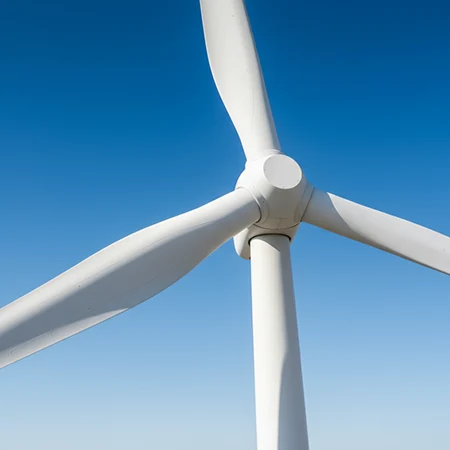
Wind turbine blades are constantly exposed to high winds, rain, hail, and environmental debris. Even minor blade damage can reduce energy output and increase operational costs.
Wind turbine blade inspections focus on detecting surface cracks, leading-edge erosion, bonding failures, and other issues unique to composite materials.
Early detection through regular inspections ensures blades remain efficient and safe, minimizing downtime and maximizing energy production.
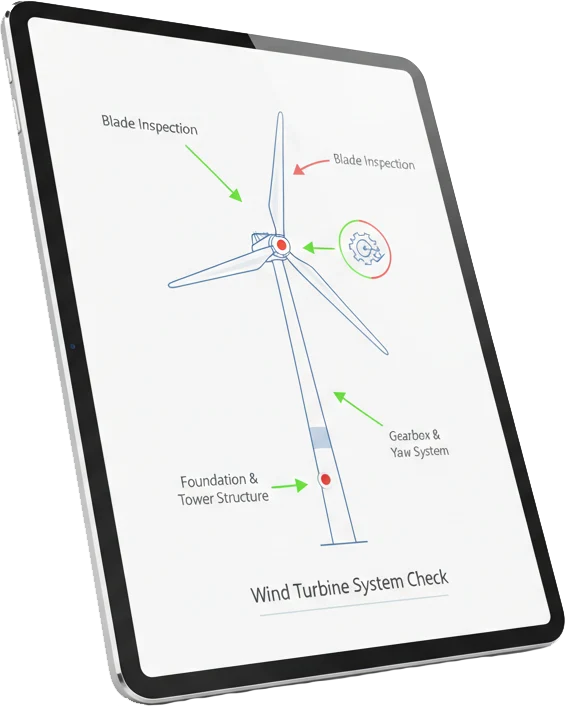
Digital asset management systems have transformed the way wind turbine inspections are conducted.
Mobile inspection apps allow technicians to document issues in real time, capture high-resolution images, and generate instant reports. These digital tools improve accuracy, streamline workflows, and support remote collaboration between field teams and engineers.
With a digital approach, wind turbine inspections become more efficient and reliable. All inspection data is stored securely, making it easy to track trends, schedule preventive maintenance, and demonstrate compliance with industry standards.
The frequency of wind turbine inspections depends on factors such as location, age, manufacturer recommendations, and regulatory requirements.
Most operators schedule annual inspections, with additional checks after severe weather events or when performance data indicates a potential issue.
Wind turbine blade inspections are often performed at least once a year, but high-usage sites may require more frequent evaluations.
Location
Manufacturer Recommendations
Age
Regulatory Requirements
Routine wind turbine inspections help operators avoid unexpected outages, reduce maintenance costs, and extend the lifespan of their assets. Inspections support optimal energy production, minimize environmental impact, and protect investments in renewable energy infrastructure.
Field Eagle is a Field Inspection Software and an Asset Inspection Software. it is a fully customizable inspection software that allows companies and agencies in conducting Inspections that are Regulatory body compliant. This Inspection Managment software can be integrated with any ERP or software to make your inspections much simpler to Manage as well.
A wind turbine inspection is a systematic assessment of the turbine’s condition and safety. Inspectors examine components such as the blades, tower, nacelle, gearbox, generator, bearings, electrical systems, fasteners, and safety equipment to identify damage, deterioration, and potential failures.
Yes. Field Eagle provides a wind turbine inspection checklist app that maintains a traceable audit trail. Inspectors can complete a standardized wind turbine inspection checklist, document findings, attach photographs, record timestamps, and track corrective actions through completion.
Yes. Field Eagle allows technicians to add photographs, notes, measurements, timestamps, and equipment details to wind turbine service tickets. Each update remains connected to the turbine, inspection, assigned technician, and resulting corrective action, creating a complete service history.
Yes. Field Eagle can be used without an internet connection at remote wind farms and other low-connectivity locations. Inspectors can complete checklists, capture photographs, record measurements, and document defects offline. The inspection data synchronizes with the central system when connectivity returns.
A wind turbine blade inspection checks for cracks, leading-edge erosion, lightning damage, delamination, bonding failures, surface deterioration, and other structural defects. Photographs and condition ratings can be attached to the turbine’s inspection record so maintenance teams can compare damage across inspection cycles.
Digital inspections standardize data collection and make turbine findings available to operations and maintenance teams more quickly. Field Eagle’s renewable energy inspection software connects inspection checklists, photographs, service records, defects, and corrective actions in one system across turbines and wind farms.
Yes. Field Eagle can be configured for drivetrain, gearbox, generator, bearing, lubrication, and related mechanical inspections. Measurements, condition ratings, photographs, abnormal observations, and maintenance recommendations remain connected to the applicable turbine and component history.
Wind turbines should be inspected according to manufacturer recommendations, regulatory requirements, operating conditions, and the turbine’s condition history. Turbines exposed to severe weather, recurring defects, or unusual vibration may require more frequent inspections than assets operating under normal conditions.