Update cookies preferences

Cooling Tower Inspection: Legionella Management, What to Inspect, and Free Templates

Cooling towers are the highest-risk water system for Legionella bacteria growth in any facility. ASHRAE 188 requires a formal Water Management Program for cooling tower systems and multiple jurisdictions have enacted mandatory Legionella inspection and testing requirements following outbreak investigations. Beyond the biological risk, cooling tower mechanical inspection programs prevent fill fouling, drift eliminator failure, structural deterioration, and fan system failures that reduce cooling capacity. Understanding the full scope of cooling tower inspection: biological, mechanical, and structural, is essential for any facility operating water-cooled HVAC or process cooling systems.

Download free cooling tower inspection templates covering mechanical, biological, and water quality inspection programs. Use the inspection interval calculator to configure the correct monthly, quarterly, and annual inspection schedule.

No obligations, See how it works for yourself.
Cooling Tower risk assesment

What Is a Cooling Tower and Why Is Inspection Critical?

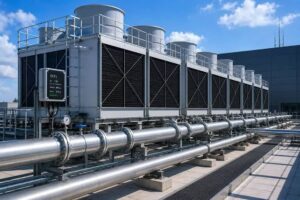
A cooling tower is a heat rejection device that removes heat from process or HVAC systems by evaporating a portion of the water circulated through the tower. Cooling towers are used in building HVAC, power generation, industrial process cooling, data centres, and manufacturing. They operate at temperatures between 20 and 45 degrees Celsius (the optimal range for Legionella pneumophila growth) and generate aerosol drift that can carry Legionella bacteria to susceptible individuals at significant distances from the tower. Both the public health risk and the mechanical reliability of the cooling system depend on systematic inspection programs. Field Eagle EHS software maintains all cooling tower inspection and water treatment documentation in one searchable system.

What to Inspect on a Cooling Tower

Cooling tower inspection covers three distinct areas: Legionella and biological risk management, mechanical condition of all tower components, and water quality and treatment parameters. All three must be addressed in a comprehensive inspection program.

Legionella Risk Indicators

Legionella Risk Indicators

Visually inspect the basin, fill media, and drift eliminators for biological growth including biofilm, algae, and slime deposits. Biofilm is the primary reservoir for Legionella in cooling tower systems. Inspect the basin for sediment accumulation, sediment provides a protected microenvironment for Legionella and other bacteria. Verify that the biocide dosing system is operating and that treatment records confirm the biocide concentration has been maintained within the required range. Any visible biological growth requires immediate corrective treatment and must be documented.
Fill Media Condition

Fill Media Condition

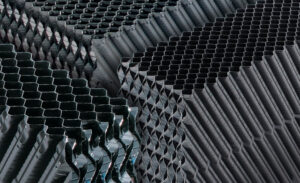
Inspect the fill media, the structured plastic media or splash bars through which water falls to maximize evaporative surface area, for fouling, scaling, biological growth, and structural damage. Fouled fill reduces evaporative efficiency and cooling capacity. Collapsed or damaged fill sections must be replaced. Fill media that cannot be adequately cleaned should be replaced during the annual shutdown inspection. Access for fill inspection typically requires the tower to be shut down.
Drift Eliminators

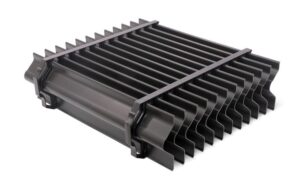
Inspect the drift eliminators for condition, completeness, and secure installation. Drift eliminators are the final barrier preventing water droplets containing Legionella from leaving the cooling tower as aerosol. Missing, damaged, or incorrectly installed drift eliminators are the primary cause of excessive drift that creates Legionella exposure risk to the public. Verify that all drift eliminator sections are present, undamaged, and correctly installed without gaps at the edges.
cold water basin

Basin and Sump

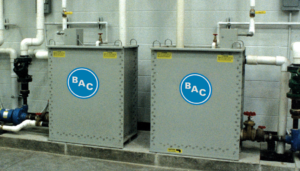
Inspect the cold water basin for sediment accumulation, cracks, corrosion, and biological growth. Clean the basin at the annual inspection and whenever significant sediment accumulation is observed. Inspect the make-up water inlet, overflow, and blowdown connections. Verify the float valve or make-up water control system is operating correctly. Inspect all screens and strainers at the basin outlet for blockage and condition.
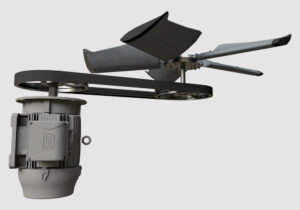
Fan System and Drive Components

Inspect fan blades for cracking, erosion, and pitch setting. Damaged fan blades cause vibration and aerodynamic imbalance that accelerates drive system wear. Check fan blade pitch uniformity across all blades. Inspect the fan drive system including belt drives, gear boxes, or direct drive motors for condition, lubrication, and vibration. Listen for unusual noise during operation. Inspect the fan stack structure for corrosion and condition.

Water Quality Parameters

Record conductivity, pH, biocide concentration, and inhibitor concentration from water quality testing. These parameters must be maintained within the ranges specified in the Water Management Program. Elevated conductivity indicates insufficient blowdown and concentration of dissolved solids. pH outside the target range indicates loss of inhibitor effectiveness. Biocide concentration below the minimum effective level creates Legionella risk. All water quality readings must be documented with date, time, and corrective actions taken.

How Often Should Cooling Towers Be Inspected?

Cooling tower inspection frequency is driven by Legionella risk management requirements and mechanical maintenance needs. Use the inspection interval calculator to configure the complete program.

  • Weekly: Water quality parameters including biocide concentration, pH, and conductivity
  • Monthly: Mechanical visual inspection covering all accessible components, biological growth assessment
  • Quarterly: Biological monitoring including Legionella testing where required by regulation
  • Semi-annual or annually: Full mechanical inspection and cleaning during planned shutdown
  • After startup from shutdown: Full inspection before return to service after any extended shutdown
  • After any unusual event: Following contamination events, overheating, or system upsets

Common Cooling Tower Inspection Findings

These findings appear most frequently in cooling tower inspections across commercial and industrial facilities. All must be documented and corrective actions tracked through Field Eagle inspection tracking software.

  • Visible biofilm or biological growth in the basin and on fill surfaces indicating inadequate biocide control
  • Drift eliminator sections missing, damaged, or incorrectly installed
  • Fill media fouled with scale, sediment, or biological deposits reducing cooling capacity
  • Basin sediment accumulation providing Legionella reservoir
  • Biocide concentration below minimum effective level confirmed by water testing
  • Fan blade cracking or erosion causing vibration and imbalance
  • Gear box or belt drive showing noise or abnormal vibration
  • Make-up water control system not maintaining correct basin level
  • Water conductivity elevated above target indicating excessive concentration factor
  • Water treatment records incomplete or not maintained as required by Water Management Program

Regulatory Requirements for Cooling Tower Inspections

Cooling tower Legionella risk management requirements are expanding across multiple jurisdictions. Field Eagle standards compliance software maintains all documentation required by applicable regulations.

  • ASHRAE 188 Legionellosis: Risk Management for Building Water Systems, Water Management Program requirements
  • New York City Local Law 77: mandatory cooling tower registration, inspection, and testing
  • HSG 274 Part 1: UK Approved Code of Practice for Legionella control in cooling towers
  • OSHA General Duty Clause: employer obligation to maintain cooling towers free of Legionella hazard
  • State and provincial Legionella regulations varying by jurisdiction
  • CDC guidelines for Legionella in building water systems

Free Cooling Tower Inspection Templates

Field Eagle provides free cooling tower inspection templates covering mechanical inspection, water quality monitoring, Legionella risk assessment, and basin cleaning documentation. Download from the inspection templates library and use immediately. Inside Field Eagle inspection management software, each cooling tower is registered as an individual asset record with its complete water treatment records, biological monitoring results, and mechanical inspection history. Field Eagle AI Preventative Maintenance identifies cooling towers showing water quality trends and mechanical deterioration patterns that precede failures and regulatory compliance events.

Frequently Asked Questions

Cooling towers create the three conditions required for Legionella to cause disease: water temperature in the growth range of 20 to 45 degrees Celsius, nutrients and biofilm that allow Legionella to multiply, and aerosol generation that can carry the bacteria to susceptible individuals. No other building water system combines all three conditions at the same scale. A single poorly maintained cooling tower has caused Legionellosis outbreaks affecting hundreds of people in the surrounding area.

ASHRAE 188 requires that facilities with cooling towers develop and implement a Water Management Program that includes hazard analysis, control measures, monitoring, corrective actions, and documentation. The inspection and monitoring elements typically include weekly water quality testing, monthly visual inspections, regular biological monitoring, and annual shutdown cleaning and inspection. The specific frequencies and parameters are determined by the Water Management Plan for each system.

Legionella testing frequency depends on the applicable regulation and the facility’s Water Management Program. ASHRAE 188 does not mandate specific Legionella test frequencies but requires monitoring proportional to the risk. Regulatory requirements vary significantly – New York City Local Law 77 requires quarterly testing and after any maintenance event. Many Water Management Programs specify monthly or quarterly culture testing with more frequent testing after any upset condition, disinfection treatment, or positive result.

A positive Legionella result requires immediate corrective action under the facility’s Water Management Program emergency response protocol. Typical responses include hyperchlorination or biocide shock treatment, system inspection and cleaning, repeat testing to confirm decontamination, and notification of the appropriate public health authority if required by local regulation. All corrective actions must be documented with dates, treatments applied, and test results confirming successful remediation.

Request a Free Demo

Call Us

Call or Fill out the Form

or Fill out the Form

Request a Demo


Request a Feature

Request a Feature

Contact Us


We take your privacy seriously and will never share your information.

Contact Us


We take your privacy seriously and will never share your information.

Request a Demo


We take your privacy seriously and will never share your information.

Podcast