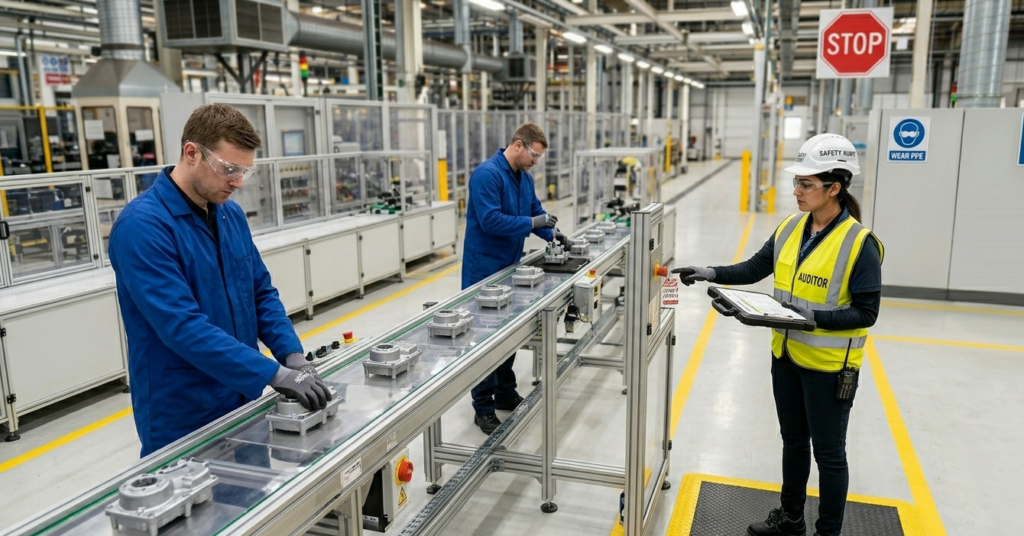
Production environments don’t stay in a single “safe state” for long. As shifts progress, machines are adjusted, materials change hands, maintenance gets scheduled between runs, and small deviations in workflow gradually introduce new risks that aren’t always visible in real time.
Because of this constant movement, safety on the production floor is less about periodic checks and more about maintaining continuous awareness of changing conditions across equipment, people, and processes.
The following audit framework outlines how to systematically evaluate production line safety across key operational areas, and how to maintain consistent oversight as work moves through each shift.
The Business Case for Daily Production Line Safety Audits
The Bureau of Labor Statistics reports that manufacturing has one of the highest rates of occupational injury and illness among all industry sectors. The average direct cost of a manufacturing injury: $40,000 to $100,000. Total cost including indirect factors (lost productivity, replacement worker training, equipment damage, investigation time, regulatory interaction): 4 to 10 times the direct cost.
Daily safety audits are the highest-return investment in manufacturing safety. The cost of a daily 30-minute audit by a trained safety person: approximately $50 in labor. The cost of the average manufacturing incident that audit could have prevented: $250,000+. The ROI of a structured daily audit program is not 100 percent. It is 5,000 percent.
Production Line Hazard Categories
Mechanical Hazards
Moving parts, rotating equipment, power transmission components, and pneumatic systems create entanglement, crush, and amputation hazards. Machine guarding is the primary control. Guards must be in place and must be effective at the point of operation, in the power transmission area, and at all other moving parts accessible to workers.
Electrical Hazards
Manufacturing environments have significant electrical hazard exposure from 120V to 480V and above. Arc flash, shock, and electrocution hazards require GFCI protection, arc flash assessment and PPE, and strict lockout/tagout compliance during maintenance.
Chemical Hazards
Process chemicals, lubricants, cleaning agents, and surface treatments create inhalation, skin contact, and fire hazards. SDS access, proper storage, appropriate PPE, and spill response capability are baseline requirements.
Ergonomic Hazards
Repetitive motion, awkward postures, and heavy lifting cause cumulative trauma disorders that are the most prevalent occupational illness in manufacturing. Ergonomic assessments should be part of your periodic safety audit program even if not included in daily checklists.
Environmental Hazards
Noise, heat, inadequate lighting, and poor air quality create both acute and cumulative health risks. These conditions are often overlooked in daily audits that focus on obvious physical hazards.
Complete Daily Production Line Safety Audit Checklist
Machine Guarding
- All moving parts guarded at point of operation
- Power transmission guards secure and in place
- No guards removed or bypassed for any reason
- Guard openings no larger than OSHA table specifications
- No worn or damaged guards that reduce effectiveness
- Interlock systems functional and not defeated
Electrical Safety
- GFCI protection on all 120V and 15A/20A circuits
- No damaged, frayed, or overloaded extension cords
- Electrical enclosures closed and latched
- Arc flash hazard labels on all equipment
- Appropriate PPE available for electrical work
- Lockout/tagout program posted and followed
Chemical Safety
- Safety Data Sheets accessible for all chemicals in use
- All chemical containers labeled with identity and hazard information
- Chemical storage segregated by compatibility
- No chemicals stored in unlabeled containers
- Spill kit accessible and fully stocked
- Eyewash and emergency shower within 10 seconds travel
Personal Protective Equipment
- Required PPE identified for each work area and task
- All workers wearing required PPE
- PPE in serviceable condition with no damage
- Safety glasses with side shields used in all production areas
- Hearing protection available where noise exceeds 85 decibels
- Hand protection appropriate for chemical and mechanical hazards
Housekeeping and Access
- Production floor aisles clear of materials, equipment, and debris
- Floor surfaces clean and dry, no oil or chemical spills
- Materials stored safely and not creating fall or knock-over hazards
- Emergency exits unobstructed and clearly marked
- Fire extinguishers accessible and monthly inspection current
- Waste containers appropriately labeled and not overflowing
Emergency Systems
- Emergency stop buttons accessible and functional (test weekly)
- Fire suppression system inspection current
- Emergency lighting functional
- First aid kit stocked and accessible
- Emergency phone numbers posted and visible
- Evacuation route map posted
Shift Handover Safety Requirements
Production line safety audits should include a formal shift handover process that transfers safety-relevant information from outgoing to incoming shift supervisors. This includes: equipment status and any known issues, ongoing maintenance work and LOTO in place, any near-misses or incidents during the shift, environmental conditions affecting safety, and any safety concerns identified but not yet corrected.
How Digital Audit Tools Transform Production Line Safety
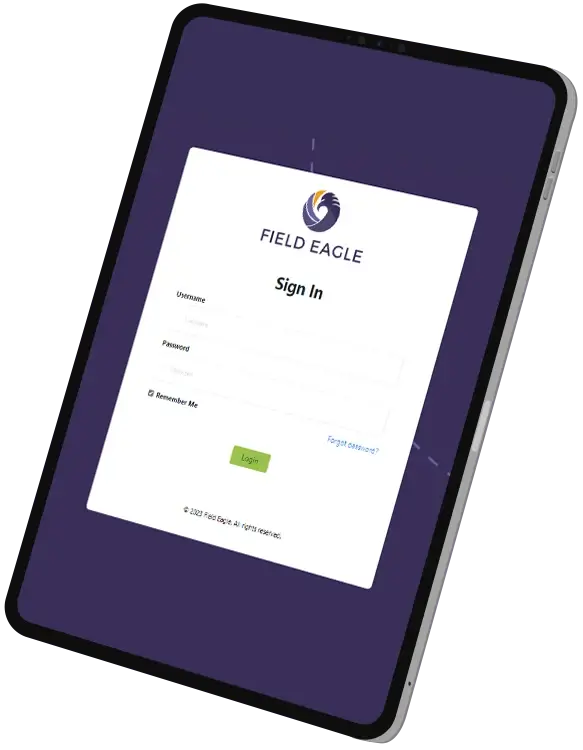
Field Eagle’s manufacturing inspection software delivers standardized daily audit checklists to production supervisors on mobile devices. Completed audits create immediate documentation. Deficiencies generate automatic work orders with deadline tracking. Management sees safety performance across all production lines in real time.
Field Eagle’s asset management software integrates inspection findings with equipment maintenance records. Recurring deficiencies on specific equipment are automatically flagged for root cause investigation, not just repeated corrective action.
The OSHA manufacturing eTool provides additional guidance on machine guarding, electrical safety, and other manufacturing hazard categories that should be reflected in your daily audit checklists.
Frequently Asked Questions
Daily pre-shift audits are industry best practice. High-risk production lines benefit from additional mid-shift checks. Monthly comprehensive safety inspections should supplement daily audits.
Production supervisors or designated safety personnel. The person conducting the audit must be trained to recognize hazards in your specific production environment and authorized to stop production for unsafe conditions.
Immediate correction if possible without stopping production. If correction requires stopping a machine or line, stop it. No production target justifies worker exposure to known hazards. Document the finding and corrective action before resuming.
Typically 30 to 45 minutes for an experienced auditor on a standard production line. Larger facilities with multiple lines may require 2 to 3 hours for complete coverage.
Direct costs including medical and workers compensation: $40,000 to $500,000. Indirect costs (lost productivity, replacement training, investigation, regulatory): 4 to 10 times direct costs. Total cost per serious injury: $200,000 to $5 million depending on severity.
Related Field Eagle Solutions
- Manufacturing Inspection Software: fieldeagle.com/manufacturing-inspection-software/
- Inspection Management Software: fieldeagle.com/inspection-management-with-field-eagle/
- Asset Management Software: fieldeagle.com/asset-management-software/
- Health and Safety Software: fieldeagle.com/health-safety-inspection-software/