NASPO Certified
No obligations, See how it works for yourself. This is not a generic demo, no sales pitch. Just our experts explaining how the product works customized to your needs.
In the realm of industrial operations, the dependability and security of storage tanks and silos take center stage. These storage vessels house vital liquids, gasses, and materials that are indispensable to a wide range of industries, underscoring the paramount importance of their preservation.
Routine inspections in protecting your assets, the environment, and the individuals who depend on these bulk material handling facilities. With Field Eagle, you get versatile silo and storage tank inspection software that can help you streamline your maintenance and inspections process. Contact us today to request a free demo!
Regular inspections are the cornerstone of preventing potential disasters. By identifying issues early, silo and above-ground storage tank (AST) inspections provide the first line of defence against hazardous leaks, structural failures, and environmental harm. Neglecting inspections can lead to costly tank maintenance and repairs, legal consequences, and damage to your industrial safety reputation.
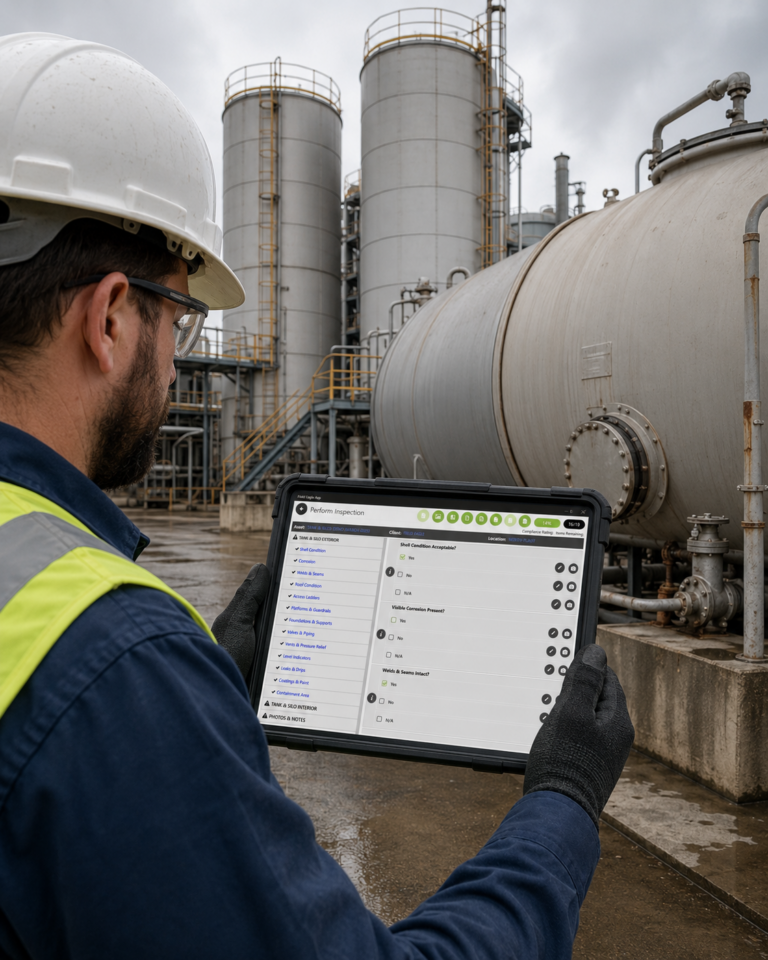
Field Eagle offers advanced software solutions specifically designed for tank and silo inspections. Our silo and tank inspection software simplifies the entire inspection process, from scheduling and planning to comprehensive reporting and in-depth analysis. With Field Eagle, you can save time, reduce costs, and ensure strict compliance with industrial safety standards and regulations.
Tank failures are estimated to occur at a rate of approximately 1 in every 20,000 tanks annually.
*(Reference: U.S. EPA).
The average cost of cleaning up a single tank failure incident, including environmental remediation and legal expenses, ranges from $100,000 to $500,000
*(U.S. EPA).
Tank failures can lead to the release of hazardous substances, contributing to about 10% of all reported chemical spills in the United States
*(U.S. EPA).
The average cost of a single tank failure incident, including cleanup and legal expenses, can reach approximately $2.4 million
*(National Institute for Storage Tank Management (NISTM)).
Tank failures can result in safety incidents, including fires, explosions, and injuries to workers. In the U.S., tank failures contribute to approximately 20% of all reported hazardous material incidents
*(Reference: U.S. EPA).
Non-compliance with tank safety regulations can result in fines ranging from $10,000 to $50,000 per day per violation, making adherence crucial
*(Reference: U.S. Environmental Protection Agency (EPA)).
Field Eagle’s Digital Inspection Checklist is versatile and applicable across a wide spectrum of industries, including water, fuel, chemical, septic, cryogenic, holding, water reservoir, and storage silos, as well as grain storage solutions.
We tailor our tank and silo inspection software solutions to meet your specific requirements, to help you oversee the safety and integrity of your storage capacity, tank reliability, and material handling within diverse sectors.
Regular tank and silo inspections can reduce the risk of accidents and incidents by up to 80%, ensuring a safer work environment
Early detection of issues through inspections can save up to 60% in maintenance and repair costs compared to addressing full-scale failures
Proper inspections and maintenance can extend the lifespan of tanks and silos by up to 25%
Our silo & tank inspection software can also help you create proactive maintenance plans. Our goal is to extend the lifespan of your tanks and silos, minimizing the risk of costly downtime or extensive repairs. With Field Eagle, you can optimize the performance of your assets while prioritizing safety, compliance, and environmental responsibility.
Trust Field Eagle to be your partner in maintaining the reliability, safety, and efficiency of your storage facilities. Explore our advanced software solutions and experience the difference in safeguarding your critical storage solutions.
Discover more about how Field Eagle can transform your industrial inspection processes for hazardous materials storage. Contact us today to request a free demo and learn about how Field Eagle can meet your unique needs and challenges.
Used for storing potable water, firefighting water, or industrial process water.
Store various types of fuels, including gasoline, diesel, and aviation fuel.
Designed for the safe storage of chemicals and hazardous substances.
Used in the oil industry for crude oil storage and processing.
Designed to contain gasses or liquids at a pressure different from the ambient pressure.
Store liquefied natural gas (LNG) at very low temperatures.
Used for sewage treatment and wastewater disposal in residential and commercial settings.
Store grains and cereals such as wheat, corn, and rice.
Store bulk cement and other construction materials.
Contain fly ash, a byproduct of coal combustion, often used in construction.
Store wood pellets used for heating or as an alternative fuel source.
Used in mining operations to store minerals and ores.
Tank inspection software is a digital system for completing storage tank inspections with mobile checklists, photos, notes, and automated inspection reports.
Yes. Field Eagle works as a tank inspection app on phones and tablets so inspectors can capture tank inspection data in the field and submit a complete digital record.
Yes. Field Eagle supports above ground storage tank inspections by using digital inspection checklists to document condition, findings, and follow up actions for each tank.
Yes. Field Eagle creates a digital tank inspection record with timestamps, photos, and inspection answers to support fuel storage tank environmental compliance monitoring and audit readiness.
Yes. Field Eagle supports oil and gas inspection software workflows by helping teams schedule inspections, capture field data, and generate reports across sites and assets.
Yes. Field Eagle supports silo inspection and silo structural inspection with customizable checklists that capture condition ratings, defects, photos, and maintenance notes.
Yes. Field Eagle can organize tank farm inspection programs by site and asset, standardize inspection checklists, and centralize reporting for faster follow up.
Field Eagle is a Field Inspection Software and an Asset Inspection Software. it is a fully customizable inspection software that allows companies and agencies in conducting Inspections that are Regulatory body compliant. This Inspection Managment software can be integrated with any ERP or software to make your inspections much simpler to Manage as well.