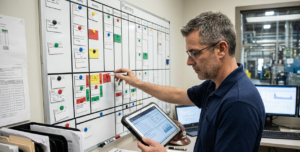
Inspections done with paper & pen are prone to data errors from things such as poor handwriting or incomplete fields. The result? An increased risk of health and safety incidents, and in turn, monetary loss. Inspections done on a mobile device such as a tablet or smartphone allow inspectors to collect accurate and detailed inspections which significantly increases safety by reducing risks due to data errors.
Mobile inspection apps increase safety by:
- Ensuring Compliance – with a mobile inspection app, standards are pre-defined and as questions are answered they are measured directly against them. This allows the inspector to easily identify non-compliance issues on the spot.
- Applying Condition Ratings – mobile inspection apps can measure the weighting, thresholds, and the criticality of each item inspected, allowing for actionable reports to be created immediately if a serious defect is discovered.
- Reducing the inspection lifecycle – mobile inspection apps shorten the time it takes to complete inspections and generate reports, which means management can respond to hazards for corrective action in a timely manner.
- Enable Quicker Inspection Turnaround – mobile inspections gather information quickly and accurately. With a quicker more accurate inspection process, serious defects can be addressed and re-inspected in an overall shorter timeframe to ensure safety with minimal downtime. Furthermore, mobile inspection forms are electronic and can be updated quickly. So, if a special inspection needs to be conducted, or additional inspection points need to be added to an asset, you can send updated forms right to the smart phone or tablet.
- Ensure Accuracy – Paper inspection forms are often compiled over time and so become disjointed and without a logical sequence to how an inspection should progress. A mobile inspection app allows inspectors to follow a sequence and ensures all answers are complete. Incomplete answers are highlighted and the inspection cannot be submitted until all questions are completely answered. Most mobile inspection devices support image, RFID, and barcode capture which ensure a higher level of detail and accuracy that pen and paper inspections cannot accomplish.
Conducting inspections using a mobile inspection app has many benefits over paper based inspections, particularly when it comes to health and safety. Whether you are conducting inspections on buildings or off shore oil rigs, reducing the risk of health and safety incidents are not only beneficial to worker’s health, but also to your bottom line.
FAQs
A mobile inspection app is a digital tool used on smartphones or tablets to conduct inspections, record findings, and report issues in real time. It improves safety by reducing human error, ensuring standardized checks, and allowing hazards to be identified and addressed immediately.
It reduces accidents by enabling faster identification of unsafe conditions and ensuring that compliance issues are flagged during inspections. This allows corrective actions to be taken before risks escalate into incidents or injuries.
Yes, they improve compliance by embedding predefined safety standards directly into inspection workflows. Inspectors can instantly compare site conditions against required standards and document non-compliance in real time.
They improve response time by generating instant reports and allowing issues to be assigned for corrective action immediately after detection. This reduces delays between inspection, reporting, and resolution of safety hazards.
They are more reliable because they enforce complete data entry, reduce missing information, and allow photos and structured inputs that improve accuracy. This ensures inspections are consistent and easier to audit compared to paper-based systems.