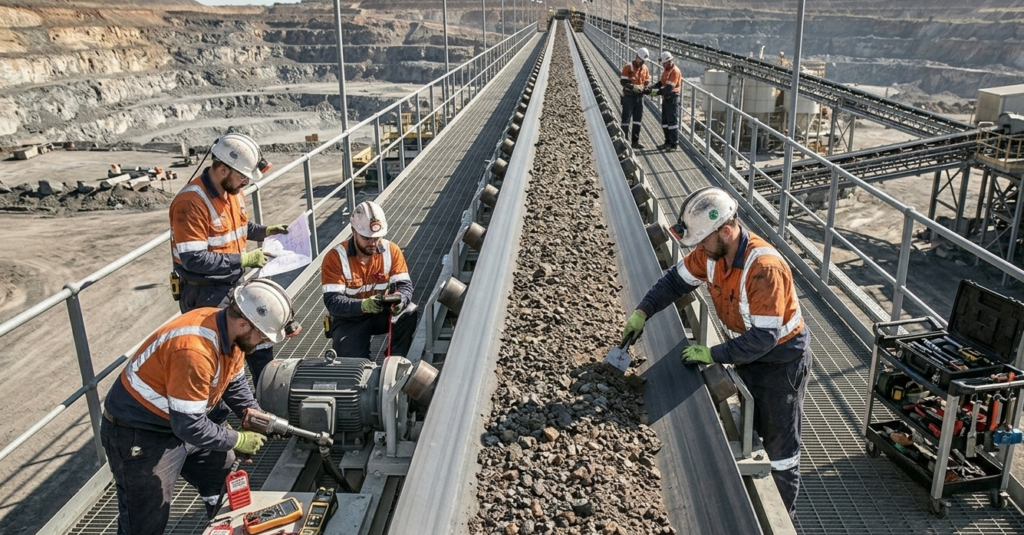
Most conveyor belt failures do not happen without warning. Bearing temperatures rise, splices begin separating, belts drift off-center, and small defects gradually turn into major shutdowns. The challenge for mining operations is identifying these warning signs early enough to prevent costly downtime and secondary equipment damage. This guide explains how predictive maintenance programs help mining teams detect failures before they happen through structured inspections, thermal monitoring, and digital maintenance tracking.
The Real Cost of Conveyor Belt Failures in Mining
Conveyor systems are the circulatory system of most mining operations. Specifically, they move ore from pit to processing, aggregate to storage, and finished product to shipping. However, a belt failure stops that flow entirely. As a result, the direct cost of an unplanned shutdown includes belt replacement, emergency labor rates, and expedited parts shipping. Moreover, the indirect cost, measured in lost production, often dwarfs the repair expense.
According to research published by the Mining Safety and Health Administration, conveyor belt incidents account for a significant portion of mining injuries and production losses annually. Most are preventable with a structured inspection and predictive maintenance program.
Cost breakdown per unplanned failure:
- Direct repair cost: $5,000 to $50,000 depending on belt length and damage extent
- Production downtime: $50,000 to $500,000 per incident at typical mining production rates
- Emergency labor premium: 150 to 200 percent of standard labor rates
- Secondary equipment damage from belt failure: $10,000 to $100,000
- Safety incident costs if personnel are near belt at failure: potentially unlimited
Primary Conveyor Belt Failure Modes
Splice Failure
Mechanical splice wear is the leading cause of catastrophic belt failure. Because splices experience concentrated stress during every revolution, inspect them at least every 500 operating hours. Specifically, look for edge plate separation, uneven splice tension, tracking problems, fastener corrosion, and tears around the splice perimeter. Replace splices at first sign of edge separation rather than waiting for full failure.
Bearing Failure in Idler Rollers
Conveyor idler bearings typically carry 200 to 500 kg of belt and material load continuously. Bearing failure progression: contamination reduces lubricant film, metal-to-metal contact begins, heat generation accelerates wear, vibration increases, roller seizes. Time from first detectable vibration change to catastrophic failure: 2 to 6 weeks with regular monitoring. Replacement cost: $200 to $800 per idler. Emergency bearing failure cost: $10,000 to $50,000 in secondary damage plus downtime.
Belt Tracking Drift
Belt tracking off-center causes accelerated edge wear, increased spillage, and eventual belt damage. Causes include misaligned pulleys, uneven loading, worn return rollers, and conveyor frame distortion. Check pulley alignment quarterly. Replace worn return rollers at first sign of flat spots or rough running. Tracking drift left uncorrected for more than 2 weeks typically causes edge damage requiring belt replacement.
Cover Degradation
Belt cover wears from abrasive material contact, UV exposure, and ozone degradation. Monthly surface inspection identifies: cuts or gouges deeper than 50 percent of cover thickness, ply separation visible as bubbles or delamination, longitudinal cracking indicating severe ozone damage, and impact damage from large material loading. Address cover damage before it reaches belt carcass.
Predictive Maintenance Inspection Schedule
Daily Visual Inspection (15 Minutes)
- Walk full belt length observing for tracking issues
- Listen for bearing noise: squealing, grinding, or rumbling indicate failure
- Observe for unusual vibration in structure or carry rollers
- Check spillage patterns: increased spillage indicates tracking or cover problems
- Verify all emergency stops accessible and unobstructed
Weekly Detailed Inspection (1 to 2 Hours)
- Inspect all splices for edge separation or fastener corrosion
- Check belt tension against specification
- Rotate all carry idlers by hand: rough rotation indicates bearing wear
- Check pulley lagging condition and seating
- Inspect take-up system for proper tension and free movement
- Document any changes from previous week inspection
Monthly Thermal Imaging Inspection
Thermal imaging of conveyor idler bearings is the most effective predictive tool available. Normal bearing temperature: 30 to 50 degrees Celsius above ambient. Warning threshold: 60 degrees above ambient. Replacement threshold: 80 degrees above ambient. Monthly thermal imaging catches bearing degradation 4 to 8 weeks before catastrophic failure, allowing planned replacement during scheduled downtime rather than emergency repair during production.
Quarterly Comprehensive Assessment
- Measure belt thickness at 10 equally spaced locations across width
- Calculate remaining cover thickness vs. replacement threshold
- Vibration analysis of all drive and tail pulleys
- Inspect conveyor structure for fatigue cracks or corrosion
- Check all guarding and safety interlocks
- Review belt tension records and calculate adjustment needs
Digital Predictive Maintenance Management
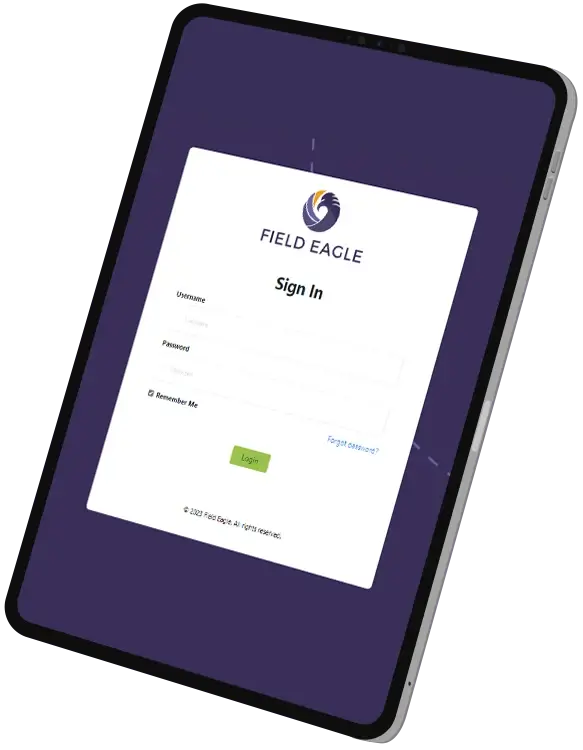
Field Eagle’s mining inspection software integrates with conveyor inspection programs to automate scheduling, capture thermal imaging data, track bearing temperature trends, and generate work orders when predictive thresholds are exceeded.
The preventative maintenance platform maintains complete bearing temperature history for every idler roller. When temperature trend increases beyond your defined threshold, the system automatically generates a replacement work order. Maintenance is planned, not reactive.
Frequently Asked Questions
Every 500 operating hours or monthly, whichever is more frequent. High-tonnage operations should inspect weekly.
Bearing vibration trending is more important than absolute level. A 10 to 20 percent increase per week indicates replacement should be scheduled within 2 to 4 weeks.
Planned replacement typically requires 2 to 4 hours. Emergency replacement after failure typically requires 8 to 16 hours due to secondary damage assessment and cleanup.
Yes. Proper tension adjustment, regular splice inspection, bearing maintenance, and cover damage repair can extend belt life 50 to 100 percent beyond the industry baseline.
3 to 5 years under normal conditions with standard maintenance. Well-maintained belts reach 5 to 8 years. Neglected belts fail in 1 to 2 years.
Related Field Eagle Solutions
- Mining Inspection Software: fieldeagle.com/mining-inspection-software/
- Preventative Maintenance Software: fieldeagle.com/preventative-maintenance-made-easy-with-field-eagle/
- Asset Management Software: fieldeagle.com/asset-management-software/
- Heavy Equipment Inspection Software: fieldeagle.com/heavy-equipment-inspection-software/