
Update cookies preferences

Inspection Interval Calculator: How Often Should You Inspect Your Assets?

Inspection frequency is not guesswork. It is determined by regulatory standards, asset criticality, operating conditions, and risk classification. Use the Field Eagle inspection interval calculator to determine the right inspection frequency for your specific assets and industry, then see how Field Eagle inspection management software enforces those intervals automatically so nothing falls through the cracks.

Covers oil and gas, mining, construction, utilities, manufacturing, and government operations.  Based on API, MSHA, OSHA, NERC, PHMSA, and ISO regulatory frameworks.

No obligations, See how it works for yourself.

Inspection Interval Tool

Asset information

Select the asset details and conditions that apply.

Operating conditions

Current condition

Click here if you do not find the asset you are looking for, and we can get you custom inspection information.

Your inspection time and priority notices will appear here.

Recommended inspection interval

Why Inspection Intervals Matter

Inspection intervals are the foundation of every asset integrity and safety management program. Set them too long and you miss developing failures. Set them too short and you waste maintenance resources on assets that do not need attention. Get them right and you have a systematic, defensible inspection program that protects assets, meets regulatory requirements, and uses inspection resources where the risk actually is.

The consequences of wrong inspection intervals fall into two categories. Too infrequent and a failure develops between inspections that could have been caught and corrected. Too frequent and maintenance budgets are consumed by unnecessary inspections that provide no additional risk reduction. Both are expensive. The first is also dangerous.

Risk based inspection methodology addresses this by setting intervals based on the actual probability and consequence of failure for each asset, rather than applying the same calendar interval to everything of the same type. Field Eagle risk based inspection software implements this approach automatically.
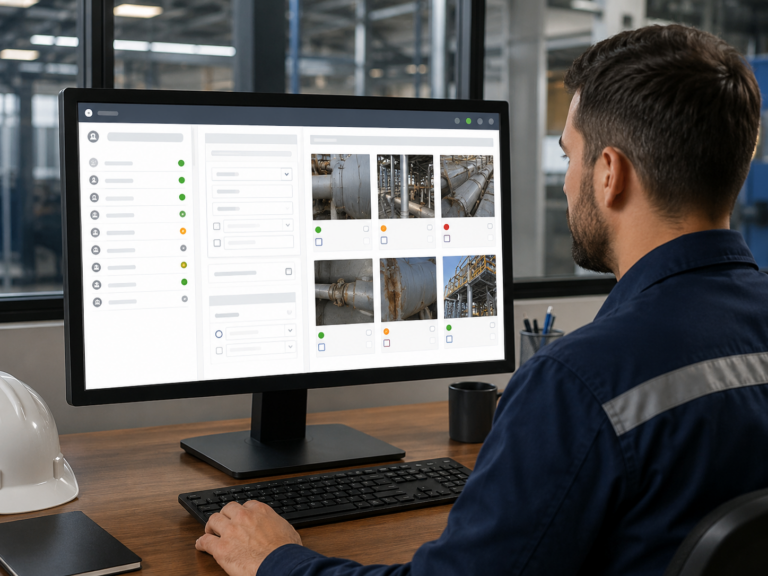

Inspection Management System

What Determines the Right Inspection Interval

1. Regulatory Requirements

Most industrial inspection programs have mandatory minimum inspection frequencies set by regulatory standards. These are the floor - you cannot inspect less frequently than the standard requires. API 510 sets intervals for pressure vessels. API 570 sets intervals for piping systems. API 653 sets intervals for above-ground storage tanks. MSHA sets inspection frequencies for mining equipment. NERC sets reliability assessment requirements for electric utility infrastructure. OSHA sets inspection requirements for workplace equipment and facilities. These regulatory minimums are non-negotiable. A risk-based approach may increase frequency above the minimum for high-risk assets but cannot reduce it below the regulatory floor.

2. Asset Criticality

Criticality is the combination of how likely an asset is to fail and what happens if it does. A high-criticality asset has either a high probability of failure, a high consequence of failure, or both. High-criticality assets require more frequent inspection than lower-criticality assets of the same type. This is the core logic of risk based inspection under API 580 and API 581.

3. Operating Conditions

The same asset type operating in different conditions requires different inspection frequencies. A pressure vessel processing a corrosive fluid at elevated temperature requires more frequent inspection than an identical vessel in a benign service. A pipeline in a high consequence area requires more frequent assessment than the same pipeline in a remote corridor. A mine haul truck operating in abrasive underground conditions requires more frequent pre-shift inspection than the same truck on a smooth surface.

4. Historical Inspection Data

The most accurate inspection interval for any specific asset is informed by its own inspection history. If an asset has been inspected quarterly for five years and condition ratings have remained stable with no significant findings, the interval may be appropriate. If an asset shows accelerating deterioration across inspection cycles, the interval needs to shorten. This is exactly what Field Eagle AI Preventative Maintenance analyses - accumulated inspection histories to identify which assets are deteriorating faster than expected and need more frequent attention.

5. Manufacturer Recommendations

Equipment manufacturers provide recommended maintenance and inspection intervals based on design parameters and operational testing. These recommendations are a starting point that gets adjusted based on actual operating conditions, regulatory requirements, and condition data from the field. When an asset is operating beyond its design parameters, manufacturer-recommended intervals may be insufficient.

Inspection Intervals by Industry and Regulatory Standard

Field Eagle is used by inspection teams in the most demanding operational environments across North America and internationally.

Moving Beyond Fixed Intervals: Risk Based Inspection

Fixed calendar intervals are a starting point, not an endpoint. The most efficient and effective inspection programs use risk based inspection methodology to allocate inspection resources based on where the actual risk is. Assets with high failure probability and high failure consequence get shorter intervals. Assets with low risk and stable condition histories get longer intervals. The total inspection effort stays the same or decreases, but its distribution reflects actual risk rather than administrative convenience.

How Risk Based Inspection Sets Intervals

  • Assess the probability of failure for each asset based on age, material, operating conditions, historical inspection data, and degradation mechanisms
  • Assess the consequence of failure including safety, environmental, production, and financial impacts
  • Plot assets on a risk matrix combining probability and consequence to determine risk level
  • Assign inspection intervals based on risk level – high risk gets shorter intervals, low risk gets longer intervals within regulatory limits
  • Reassess risk levels as new inspection data accumulates and condition changes

Why Condition Data Changes Everything

A fixed interval program treats all assets of the same type identically. A risk based program individualizes intervals based on actual asset condition. As Field Eagle AI Preventative Maintenance analyses accumulated inspection histories, it identifies which specific assets are deteriorating faster than expected, which failure modes are developing, and which inspection schedules need adjustment. This is the transition from preventative maintenance to predictive maintenance, maintenance driven by what the data says about each specific asset rather than what the calendar says.

What Happens When Inspection Intervals Are Wrong

Too Infrequent: The Missed Failure

When inspection intervals are too long, defects develop and progress beyond the correctable threshold between inspection cycles. Corrosion that would have been caught at three millimeters of wall loss reaches the minimum allowable thickness before the next scheduled inspection. A crack that would have been detected at two millimeters propagates to critical size. Ground support that was adequate at the last inspection has deteriorated beyond safe limits before the next inspection.

The consequences range from expensive emergency repairs to catastrophic failures with safety, environmental, and financial consequences that dwarf the cost of more frequent inspection.

Too Frequent: The Wasted Resource

When inspection intervals are too short, inspection resources are consumed by unnecessary inspections that generate no new actionable information. Budget and personnel that could be directed toward higher-risk assets are tied up inspecting assets that are not deteriorating. Over-maintained assets that are disturbed unnecessarily can even experience induced failures from the maintenance activity itself.

Risk based inspection solves this by directing more inspection attention to higher-risk assets and less to lower-risk assets, optimizing the total inspection effort across the portfolio.

How Field Eagle Enforces Inspection Intervals Automatically

Setting the right inspection interval is only half the problem. Enforcing it is the other half. Paper-based and spreadsheet-based inspection programs frequently miss scheduled inspections because no system enforces the schedule. Field Eagle inspection management software enforces inspection intervals automatically.

  • Every asset in the Field Eagle register has defined inspection intervals assigned based on regulatory requirements, risk classification, and operational criticality
  • Field Eagle sends automatic alerts to inspection coordinators when inspections are due
  • Overdue inspections escalate automatically with increasing urgency notifications
  • Managers see inspection completion status across all assets and all sites in real time from the central dashboard
  • Every completed inspection is timestamped, signed, and linked to the asset record – creating an auditable history of interval compliance
  • Field Eagle AI analyses the accumulated inspection data to recommend interval adjustments based on actual asset condition trends

The result is an inspection program where the right assets get inspected at the right frequency, the compliance documentation is generated automatically, and the data from every inspection cycle feeds into the intelligence layer that makes the program smarter over time. See: inspection tracking software.

What Our Clients Say About Us

Frequently Asked Questions About Inspection Intervals

An inspection interval is the amount of time between one scheduled inspection and the next.
Inspection intervals may be measured in days, weeks, months, operating hours, production cycles, or another unit appropriate to the asset and inspection program.

Inspection and fluid sampling intervals should follow applicable requirements and reflect the equipment’s condition, usage, operating environment, and failure risk.

There is no single standard interval for every asset. Equipment operating under severe conditions or showing deterioration may require more frequent inspection and sampling than stable, lower-risk equipment.

Continuous inspection is the ongoing monitoring of equipment, processes, or operating conditions instead of relying only on periodic checks.
It may involve sensors, automated alerts, operator observations, or frequent digital inspections. Continuous inspection is typically used for critical assets where conditions can change quickly.

Determine inspection frequency by considering regulatory requirements, manufacturer recommendations, asset criticality, operating conditions, and previous inspection results.
High-risk assets generally require shorter intervals. Lower-risk assets may support longer intervals when permitted by the applicable requirements and supported by reliable condition data.

An inspection interval is the time between inspections, while inspection frequency describes how often inspections occur.
For example, an interval of seven days means the inspection frequency is approximately once per week.

An inspection interval should change when equipment condition, operating demands, failure risk, or applicable requirements change.
Recurring defects or accelerated deterioration may require more frequent inspections. Consistently stable results may support a longer interval when the change is technically justified and permitted.

Field Eagle connects inspection schedules to individual assets and tracks upcoming, completed, and overdue inspections.
Inspection coordinators can monitor scheduled work from a centralized dashboard. Each completed inspection is timestamped and added to the asset history, helping teams determine whether current intervals remain appropriate.