NASPO Certified
Electrical panel failures cause fires, arc flash incidents, and electrocutions. OSHA 29 CFR 1910 Subpart S and NFPA 70B Recommended Practice for Electrical Equipment Maintenance establish inspection and maintenance requirements for electrical distribution equipment. Arc flash incidents from electrical panels release enormous energy in milliseconds, causing severe burns at distances of several feet from the panel. A systematic electrical panel inspection program identifies the developing conditions, loose connections, overloaded circuits, damaged insulation, and moisture ingress, that cause catastrophic failures before they occur.
Download free electrical panel inspection templates from Field Eagle. Use the inspection interval calculator to configure the correct quarterly and annual inspection schedule for all electrical distribution equipment.
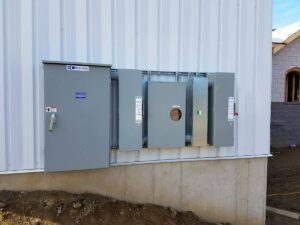
An electrical panel or switchboard is an assembly of components that receives electrical power from a supply source and distributes it to branch circuits through overcurrent protective devices. Types include main distribution panels, branch circuit panels, motor control centres, load centres, and switchgear. All contain energized conductors and overcurrent protection devices that require periodic inspection. In industrial facilities, electrical panels supply power to manufacturing equipment, process machinery, HVAC systems, and building systems. Proper inspection requires arc flash assessment and appropriate personal protective equipment for the panel’s incident energy level.
Electrical panel inspection involves both external visual inspection and internal inspection that requires qualified electrical personnel and appropriate arc flash PPE. External inspections can be performed with the panel energized. Internal inspections of energized panels require arc flash-rated PPE appropriate for the panel’s incident energy level.

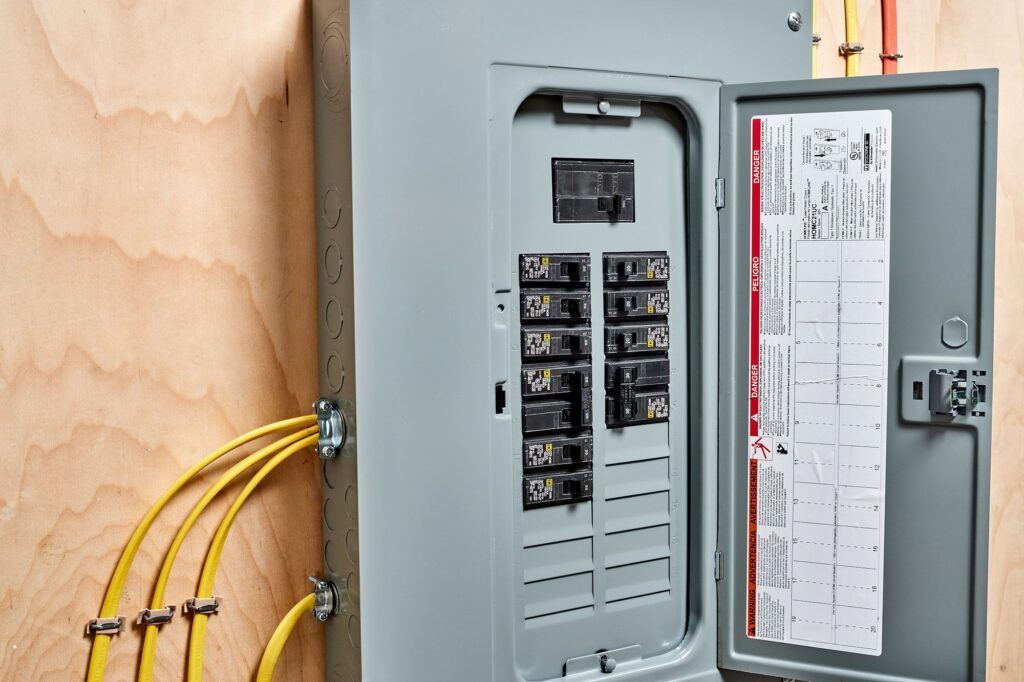
Inspect the panel enclosure for physical damage, corrosion, moisture ingress, and proper sealing. A panel enclosure that is not adequately sealed allows moisture, dust, and insects to enter and cause insulation degradation and connection corrosion. Verify the panel door seals are intact and the door closes securely. Inspect for heat discoloration on the enclosure exterior that may indicate overloaded circuits or loose connections inside. Verify the area in front of the panel maintains the required 36 to 42 inch clearance specified in NEC 110.26.
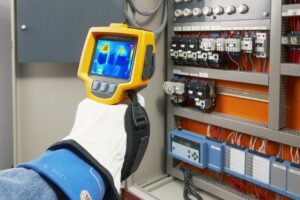
Thermographic inspection using an infrared camera identifies hot spots at electrical connections that are invisible to visual inspection. Loose connections have elevated resistance that causes heating. A connection running significantly hotter than adjacent connections indicates a problem that will progress to failure. NFPA 70B recommends thermographic inspection of all electrical panels annually. Thermographic inspection must be performed with the panel energized at normal operating load to detect load-dependent heating. This inspection requires arc flash PPE appropriate for the panel's incident energy level.
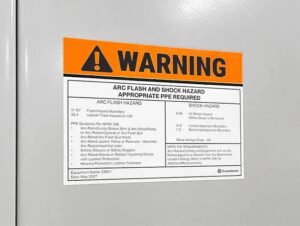
Verify that the arc flash hazard label is present on the panel, current, and legible. NFPA 70E requires arc flash labels on electrical equipment that may require examination, adjustment, or maintenance while energized. The label must show the incident energy level or the required PPE category, the arc flash boundary, and the working distance used in the analysis. Missing or outdated arc flash labels mean that workers cannot determine the correct PPE required before opening the panel.
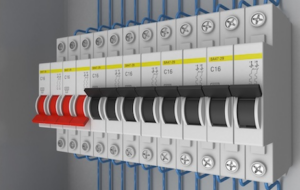
Inspect all circuit breakers and fuses for damage, correct labeling, and proper sizing. Circuit breakers with handles that feel loose, do not trip cleanly, or show heat discoloration around the connection points should be tested and replaced. Verify all circuits are labeled correctly on the panel directory. Missing or incorrect circuit labels prevent safe work practices including proper lockout during maintenance. Inspect for oversized fuses or breakers that have been installed to avoid nuisance tripping - this is a serious fire hazard.
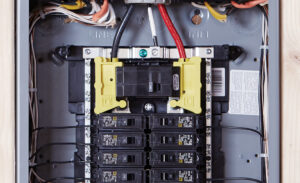
Internal electrical panel inspection by qualified electricians with appropriate PPE covers: connection tightness at all terminals and bus bars using calibrated torque tools, bus bar condition and insulation integrity, wiring condition and insulation integrity, evidence of overheating at any connection point, cable management and conductor bundling that may cause overheating, and evidence of moisture, contamination, or insect infiltration. All internal inspection findings must be documented with photos and corrective actions assigned.

NFPA 70B provides inspection frequency recommendations based on panel criticality and environment. Use the inspection interval calculator to configure the program for each panel in your facility.
These deficiencies are most frequently identified during electrical panel inspections across industrial and commercial facilities. All must be documented and tracked through Field Eagle safety inspection software.
Electrical panel inspection requirements come from OSHA, NFPA, and the NEC. Field Eagle standards compliance software maintains all inspection documentation.
Field Eagle provides free electrical panel inspection templates covering external visual inspection, thermographic inspection documentation, and internal inspection checklists for qualified electrical personnel. Download from the inspection templates library and use immediately. Each panel is registered as an individual asset record in Field Eagle inspection management software with its complete inspection history, thermographic survey results, and maintenance records. Field Eagle AI Preventative Maintenance analyses panel inspection histories to identify equipment showing progressive deterioration before failures occur.
Arc flash is an electrical explosion caused by a fault current passing through air between energized conductors. An arc flash releases enormous energy in milliseconds – a medium-voltage arc flash can release 40 or more calories per square centimetre at 18 inches from the arc, which is fatal without appropriate PPE. Any work on energized electrical panels requires an arc flash hazard analysis to determine the incident energy level and the arc flash PPE required. Electrical panel inspection that requires opening the panel while energized must be performed by qualified electricians wearing appropriate arc flash PPE.
External visual inspection of a closed electrical panel enclosure can be performed by trained facility personnel. Any inspection that requires opening an energized panel must be performed by a qualified person as defined by OSHA and NFPA 70E – someone trained in the construction and operation of electrical equipment and the hazards involved. Thermographic inspection of energized panels requires qualified electricians with appropriate arc flash PPE determined by the panel’s incident energy level.
Thermographic inspection uses an infrared camera to detect temperature differences at electrical connections that are invisible to visual inspection. A loose or corroded connection has elevated resistance that causes heating – the infrared camera detects this as a hot spot compared to adjacent connections. Most electrical failures that cause fires and arc flash events are preceded by progressively worsening hot spots that thermographic inspection identifies months before catastrophic failure. NFPA 70B recommends annual thermographic inspection of all electrical distribution equipment.
Field Eagle registers every electrical panel as an individual asset with its location, voltage level, arc flash incident energy, and inspection program. Thermographic inspection results are documented with photos linked to specific panels. Annual internal inspection records are maintained with qualified electrician identification. The inspection tracking software alerts facility managers when inspections are due and tracks corrective actions on all identified deficiencies to verified resolution.