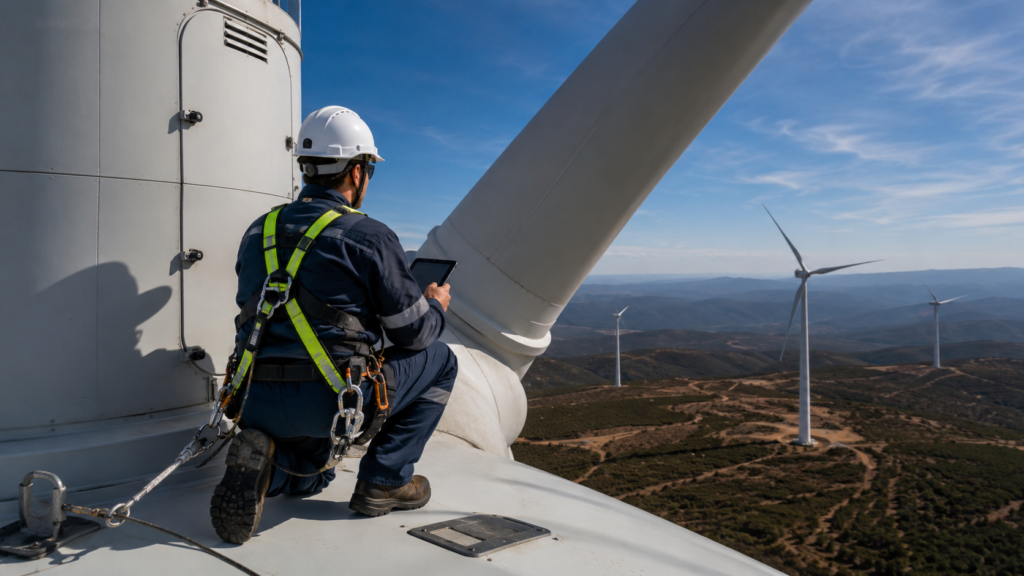
Wind turbines operate in some of the harshest environments in the energy sector. Constant mechanical stress from rotation, exposure to wind, rain, UV radiation, and temperature extremes, and the challenge of working at height all make wind turbine inspection both critical and complex. A blade failure, gearbox breakdown, or structural defect on an uninspected turbine can take a wind asset out of production for weeks and cost hundreds of thousands of dollars in repairs and lost generation revenue.
This guide explains what wind turbine inspections involve and which components require the most attention. It also examines regulatory and lender requirements. Finally, it shows how renewable energy inspection software can make inspection programs more systematic and improve documentation.
Why Wind Turbine Inspection Matters
Manufacturers design wind turbines to operate for 20 to 25 years. However, reaching that lifespan depends on proper maintenance and regular inspections. Undetected defects can significantly shorten a turbine’s service life and create safety risks for maintenance personnel and the public.
Beyond operational needs, lenders, insurers, and offtake agreement counterparties increasingly require wind turbine inspections. For example, project finance agreements often establish specific inspection intervals and documentation standards for wind assets. In addition, insurers may require evidence of a systematic inspection program before providing coverage. Finally, grid operators may request turbine condition records to confirm compliance with interconnection requirements.
Key Components Inspected in Wind Turbine Inspections
Blades
Blades are the most maintenance-intensive component on a wind turbine and often the most expensive to repair or replace. Blade inspections look for:
- Leading edge erosion from rain, hail, and particulate impact
- Surface cracks and delamination in the composite structure
- Trailing edge bond line failures
- Lightning damage at tips and along the blade length
- Internal structural defects identified through thermographic or ultrasonic inspection
Tower and Foundation
The tower and foundation support the turbine’s entire structural load. Therefore, inspections cover:
- External corrosion of the tower shell
- Internal corrosion and coating condition
- Bolt torque verification on flange connections
- Weld condition at flange joints and access hatches
- Foundation condition including cracking, settlement, and drainage
Nacelle and Drivetrain
The nacelle houses the gearbox, generator, main shaft, and related mechanical and electrical systems. Therefore, nacelle inspections cover:
- Gearbox oil condition and level
- Bearing condition and lubrication
- Main shaft condition and coupling integrity
- Brake system functionality and pad wear
- Generator condition and cooling system
- Internal corrosion and water ingress
Electrical Systems
Wind turbine electrical systems include power conversion equipment, pitch controls, yaw drives, and monitoring devices. Accordingly, electrical inspections cover:
- Cable condition and connection integrity
- Panel condition and protection device functionality
- Transformer condition and oil level
- Pitch control system functionality
- SCADA and monitoring system operation
Access and Safety Systems
Inspectors must assess wind turbine ladders, platforms, and lifting equipment to confirm their structural integrity and compliance with working-at-height regulations. Safety systems including fall arrest anchors, fire suppression, and emergency descent devices require regular inspection and certification.
Wind Turbine Inspection Methods
Visual Inspection
Trained technicians inspect turbines from the ground using binoculars and from inside the tower and nacelle. These inspections establish a baseline condition for most turbine components. In addition, teams perform ground-level checks more frequently and complete detailed access inspections at scheduled intervals.
Drone Inspection
Drone-based visual inspection has become the standard approach for blade inspection, allowing high-resolution photography and video of blade surfaces without the need for rope access or aerial work platforms. Drone inspection is faster, safer, and less expensive than rope access for routine blade condition assessment.
Non-Destructive Testing
Non-destructive testing methods including ultrasonic testing, thermographic inspection, and acoustic emission monitoring identify internal defects in blades, structural components, and mechanical systems that visual inspection cannot detect.
Regulatory and Lender Requirements
Industry standards and contractual obligations govern wind turbine inspection requirements. IEC 61400 provides the primary international standard for wind turbine safety and performance. Manufacturer maintenance manuals specify inspection intervals and procedures for each turbine model. In addition, project finance agreements often establish minimum inspection frequencies and documentation requirements. Finally, insurers may require specific inspection certifications before providing coverage.
How Digital Inspection Software Supports Wind Turbine Programs
Wind turbine inspection programs face specific challenges that digital inspection tools are well suited to address.
- Inspection teams often work on turbines in remote locations with limited connectivity. As a result, offline tablet functionality allows them to complete inspections in the field and sync the data when a connection becomes available.
- Blade and tower findings require detailed photo documentation linked to specific locations. Therefore, digital forms allow inspectors to attach photos directly to individual inspection items.
- Inspection intervals and component-specific maintenance requirements vary by turbine model and age. To address this variation, customizable checklists support different turbine types within the same platform.
- Lenders and insurers require organized, retrievable inspection records. For this reason, digital systems maintain searchable inspection histories without relying on manual filing.
- Multi-site wind portfolios require consolidated performance reporting. In response, centralized inspection databases support portfolio-level reporting and benchmarking.
Frequently Asked Questions
Wind turbine inspection frequency varies by component and follows the manufacturer’s maintenance schedule. For example, inspection teams typically conduct routine visual inspections each year. In addition, they inspect blades by drone or rope access every one to two years. At manufacturer-defined intervals, technicians also assess major drivetrain components through gearbox oil analysis and bearing inspections. Finally, lenders and insurers may require additional inspections.
Blade damage, gearbox failures, and electrical system faults are among the most common causes of wind turbine downtime. Regular inspections help teams detect blade damage caused by lightning strikes, leading-edge erosion, and structural fatigue before it results in catastrophic failure. Similarly, oil analysis and vibration monitoring can reveal oil contamination and bearing wear before a gearbox fails.
Drone inspections provide a cost-effective, high-resolution view of blade surfaces without the safety risks and logistical complexity of rope access. In addition, they allow teams to inspect multiple turbines in a single day and, in some cases, avoid shutting the turbine down. However, rope access inspections enable closer physical examination and non-destructive testing at specific locations, which drones cannot yet replicate. For this reason, many inspection programs use drones for routine visual assessments and rope access for detailed investigations of defects identified during drone inspections.