NASPO Certified
Scaffold failures are among the most serious incident types in construction and industrial operations. OSHA 29 CFR 1926.451 requires that scaffolds be inspected before each work shift by a competent person. Scaffold-related incidents involve collapses, falls from improperly planked platforms, and tip-overs from inadequate base support. All are preventable with systematic pre-shift inspection by someone who knows what to look for. The requirements are detailed and the consequences of missing a defect are severe.
Download free scaffold inspection templates for supported scaffolds, suspended scaffolds, and mobile scaffolds. Use the inspection interval calculator to configure inspection schedules across all scaffold structures on your site.
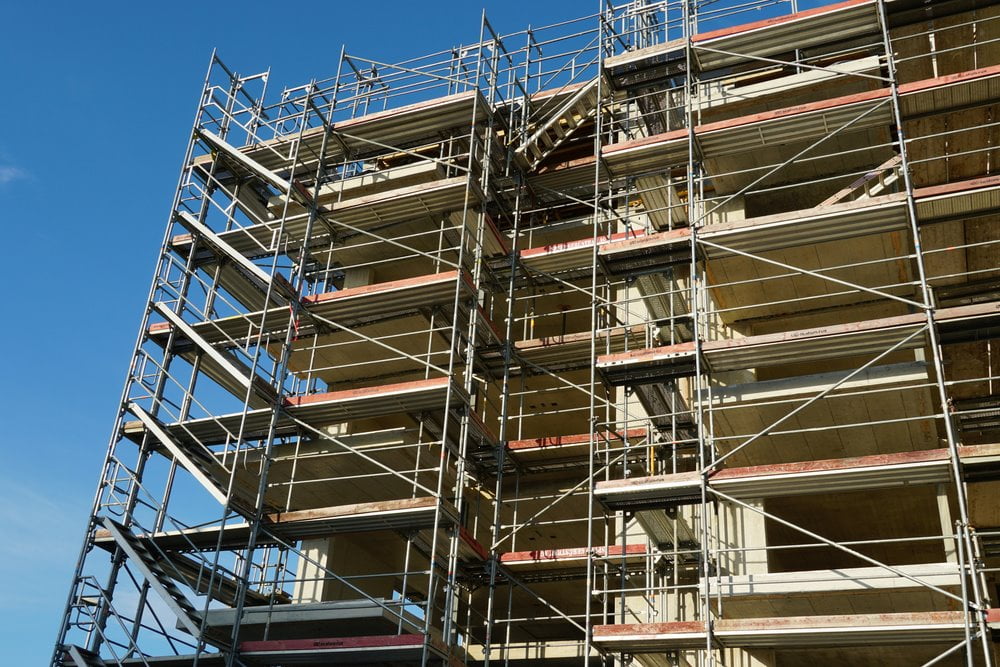
A scaffold is a temporary elevated work platform used to support workers and materials during construction, maintenance, and renovation work. Types include tube and coupler scaffolds, system scaffolds such as ringlock and kwikstage, frame scaffolds, suspended scaffolds including swing stages and single point adjustable, mobile tower scaffolds, and mast climbing work platforms. Each type has specific inspection criteria under OSHA 29 CFR 1926.451 and ANSI A10.8. All scaffold types used in construction operations require inspection before each work shift and after any event that could have affected the scaffold’s integrity.
Scaffold inspection covers the foundation and base support, the structural components including frames and tubes, the platform, access, fall protection, and overhead protection. The inspection must be completed before workers are permitted on the scaffold each shift.

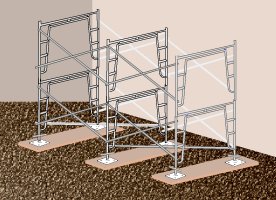
Inspect all base plates and mudsills for proper contact with the ground and adequate bearing surface. Base plates must be in full contact with mudsills and the mudsills must distribute load across adequate bearing area for the soil conditions. Inspect for settlement or sinking that has occurred since the previous shift. Any scaffold that has settled unevenly must be releveled before use. Inspect screw jack extensions and verify they do not exceed the maximum allowable extension for the scaffold system. Overextended screw jacks are a common collapse cause.

Inspect all frames, tubes, and couplers for damage, bending, and corrosion. Bent or buckled scaffold components must be replaced before the scaffold is used. On tube and coupler scaffolds, verify all right-angle couplers and swivel couplers are fully tightened to the required torque. On system scaffolds, verify all rosette or ring connections are fully seated and locked. Inspect all diagonal bracing for presence and secure connection. Missing diagonal bracing compromises the scaffold's lateral stability.
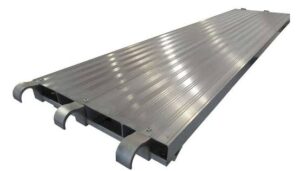
Inspect all platform planks and scaffold decking for condition, span, and overhang. Wood scaffold planks must be scaffold grade lumber, free from splits and large knots that reduce strength, and must span no more than 8 feet between supports for 2x10 planks under normal loading. Plank overhang must be between 6 and 12 inches past the support. Planks must be cleated or otherwise secured against displacement. Gaps between planks must not exceed 1 inch. Metal and fabricated decking must be fully locked in position with no gaps at the front edge of the platform.

Verify all required guardrail components are in place and secure. OSHA requires top rails between 38 and 45 inches in height, mid-rails at approximately mid-height between the top rail and platform, and toe boards at least 3.5 inches high where tools or materials could fall below. Inspect all guardrail connections for tightness and condition. Verify personal fall arrest system anchor points if used as the means of fall protection on the scaffold.
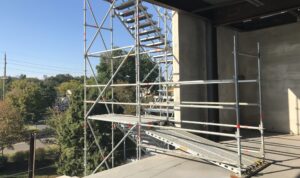
Verify that safe access is provided to all scaffold levels. OSHA prohibits climbing cross-bracing as a means of scaffold access. Acceptable access includes built-in ladders, stair towers, and portable ladders. Inspect all scaffold access points for condition and security. Verify that scaffold access ladders are tied off at the top and extend at least 3 feet above the landing.
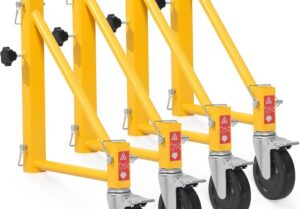
On scaffolds adjacent to buildings, inspect all ties to the building structure for condition and security. Ties must be installed at the required vertical and horizontal intervals for the scaffold system and height. Inspect all outrigger beams and counterweights on suspended scaffolds. Verify the scaffold has not moved from its original position and that no ties have been removed since the previous inspection.

OSHA and industry standards establish the minimum scaffold inspection frequency. Use the inspection interval calculator to schedule all scaffold inspections across active job sites.
These deficiencies are most frequently found during scaffold inspections across construction sites. Each must be corrected before workers are permitted on the scaffold and documented through Field Eagle inspection tracking.
Scaffold inspection requirements under OSHA are among the most detailed of any equipment type. Field Eagle safety audit software maintains all scaffold inspection records with competent person identification, inspection date, findings, and corrective action documentation.
Field Eagle provides free scaffold inspection templates for supported scaffolds, suspended scaffolds, mobile towers, and mast climbing work platforms. Download from the inspection templates library and use immediately. Inside Field Eagle inspection management software, scaffold structures are registered as assets with inspection histories linked to specific scaffold locations and job sites. Competent person identification is captured on every inspection record. Field Eagle EHS software integrates scaffold inspection compliance into site safety audit programs.
OSHA defines a competent person as someone capable of identifying existing and predictable scaffold hazards and authorized to take corrective action. For scaffold inspection, the competent person must have knowledge of OSHA 1926.451 requirements, understand the specific scaffold system being used, be able to identify structural defects, plank deficiencies, fall protection gaps, and base support problems, and have the authority to remove workers from an unsafe scaffold.
Inadequate base support is the most common cause of scaffold collapse. This includes base plates not properly seated on mudsills, mudsills on soft ground without adequate bearing area, overextended screw jacks, and settlement of the scaffold base between inspection cycles. The second most common cause is missing or inadequate ties to the building structure, which allows the scaffold to tip outward under load or wind pressure.
OSHA 29 CFR 1926.451(f)(12) requires that scaffolds be inspected after strong winds and prohibits scaffold work during high winds unless a competent person has evaluated the conditions and determined it is safe. Most scaffold manufacturers and safety professionals recommend suspending scaffold work when sustained winds exceed 20 mph, but the competent person must make this determination based on the scaffold type, height, loading, and specific wind conditions.
Field Eagle manages scaffold inspection programs across unlimited job sites from one central platform. Each scaffold structure is registered as an asset with its location, type, and erection date. Pre-shift inspections link to the specific scaffold asset with competent person identification, inspection date, findings, and any corrective actions. Site safety managers monitor inspection compliance across all active scaffolds from the Field Eagle inspection tracking dashboard.