Update cookies preferences

Pump Inspection: What to Inspect, Intervals, and Free Templates

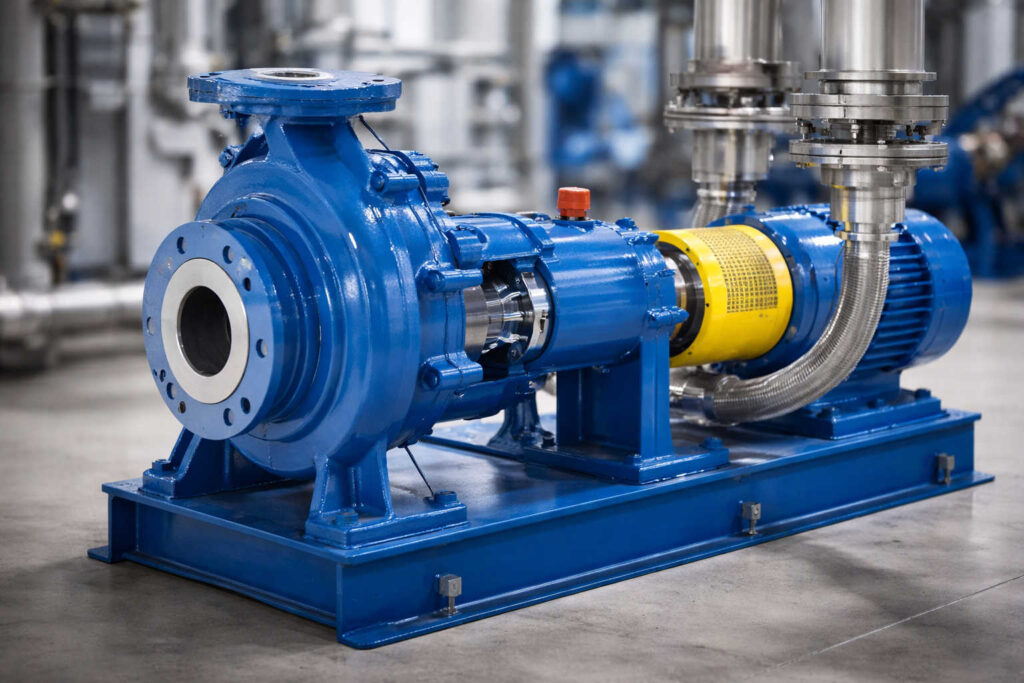
Industrial pumps are among the most critical and failure, prone rotating equipment in oil and gas, chemical, water treatment, mining, and manufacturing operations. Pump failures cause production stoppages, process upsets, safety incidents, and environmental releases. Most pump failures are preceded by weeks or months of detectable warning signs, vibration changes, temperature increases, seal leaks, and performance degradation, that a systematic inspection program identifies before catastrophic failure occurs. Field Eagle AI Preventative Maintenance analyses accumulated pump inspection histories to identify which units are heading toward failure before they reach critical condition.

Use the Field Eagle Inspection Interval Calculator to set the correct inspection frequency for each pump in your asset register. Download free pump inspection templates for centrifugal, positive displacement, and submersible pump types.

No obligations, See how it works for yourself.
Industrial pumps

What Types of Industrial Pumps Require Regular Inspection?

Industrial pump inspection programs apply to all pump types across process and utility service. Centrifugal pumps are the most common type in oil and gas, water treatment, and chemical applications, transferring fluid by converting rotational energy to fluid velocity. Positive displacement pumps including gear pumps, screw pumps, and diaphragm pumps maintain constant flow regardless of discharge pressure and are used for viscous fluids and precise dosing applications. Submersible pumps are used in water and wastewater lift stations, dewatering, and slurry transfer. Reciprocating pumps including plunger pumps are used for high-pressure injection and chemical injection in oil and gas operations. Each type has distinct inspection criteria.

What to Inspect on an Industrial Pump

Pump inspection covers the mechanical condition, seal system, bearing condition, coupling, driver, and performance parameters. Most pump inspections combine visual observation with operating data review during the pump’s normal operation.

Mechanical Seal and Packing

Mechanical Seal and Packing

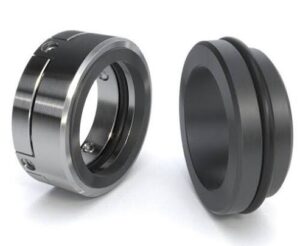
The mechanical seal is the most maintenance-intensive and failure-prone component on most centrifugal pumps. Inspect the seal area for leakage. A mechanical seal showing visible leakage is in the process of failing and requires planned maintenance before it fails completely. For packed pumps, inspect the stuffing box for controlled leakage, a correctly adjusted packing gland should allow a small controlled drip rate that lubricates and cools the packing. Zero leakage from a packed pump indicates overtightened packing that will overheat and damage the shaft sleeve.
Bearing Temperature and Vibration

Bearing Temperature and Vibration

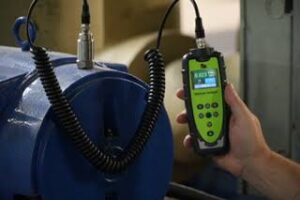
Bearing condition is assessed by temperature measurement and vibration monitoring. Bearing housing temperature should be measured at each inspection and compared to the baseline established when the pump was commissioned or last overhauled. A bearing running significantly hotter than baseline indicates developing bearing wear, lubrication breakdown, or misalignment. Vibration measurements using a handheld vibration meter at each bearing housing identify developing imbalance, misalignment, and bearing defects before they cause failures.
Coupling and Alignment

Coupling and Alignment

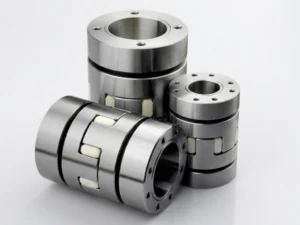
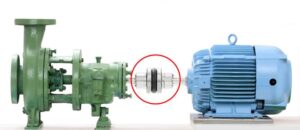
Inspect the coupling between the pump and driver for condition, wear, and element deterioration. Flexible coupling elements including rubber inserts and elastomeric spiders absorb misalignment and dampen vibration, when these elements are worn, misalignment loads transfer directly to the bearings, accelerating bearing wear. Coupling guard must be in place and secure before operating. Misalignment is the leading cause of premature bearing and seal failure in centrifugal pumps.
Suction and Discharge Performance

Suction and Discharge Performance

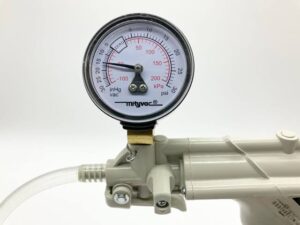
Compare current suction pressure, discharge pressure, and flow rate against the pump's rated performance curve. A pump delivering less than expected flow at its rated pressure indicates wear ring deterioration, impeller damage, or cavitation. A pump drawing excessive power indicates increased specific gravity of the pumped fluid, impeller wear causing increased clearances, or discharge restriction. Performance trending across inspection cycles identifies pumps deteriorating toward the point where they can no longer meet process requirements.
Driver and Motor

Inspect the pump driver, electric motor, diesel engine, or steam turbine, for temperature, vibration, and condition. For electric motor-driven pumps, check motor current draw and compare to nameplate full load amperes. Elevated current indicates motor or driven equipment problems. Inspect motor cooling fan and air inlet filter for obstruction. For diesel-driven pumps in field applications, inspect fuel, oil, coolant, and overall engine condition at each inspection.
Ancillary Systems and Piping

Ancillary Systems and Piping

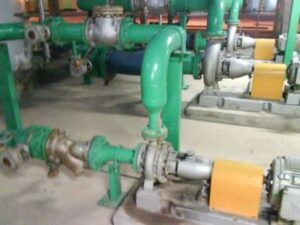
Inspect all suction and discharge piping connections for leaks. Check all isolation valve positions to confirm correct operating configuration. Inspect pressure gauge and flow meter condition and calibration status. For pumps with auxiliary cooling or flushing systems, verify these systems are operating correctly. Inspect pump baseplate for corrosion, cracks, and grout condition - a deteriorated baseplate allows pump movement that causes misalignment.

How Often Should Industrial Pumps Be Inspected?

Pump inspection frequency depends on the pump’s criticality, service conditions, and whether it is a single or redundant unit. Use the inspection interval calculator to configure the correct program based on risk classification.

  • Daily check: Critical pumps with no installed standby, temperature, vibration, seal condition, operating parameters
  • Weekly inspection: All process-critical pumps covering mechanical condition, performance data, and seal status
  • Monthly inspection: Full inspection including coupling, baseplate, ancillary systems, and driver condition
  • Annual overhaul inspection: Internal inspection of wear rings, impeller, bearings, and seal faces during planned maintenance
  • Vibration analysis: Monthly for critical pumps, quarterly for standard service pumps, by condition monitoring program
  • Alignment check: After any maintenance event and annually for all process-critical pumps

Common Pump Inspection Findings

These findings appear most frequently in industrial pump inspection programs across oil and gas, water treatment, manufacturing, and chemical operations. Each must be documented and tracked through Field Eagle equipment maintenance software.

  • Mechanical seal weeping or leaking indicating seal face deterioration
  • Bearing housing temperature elevated above baseline indicating developing bearing wear
  • Abnormal vibration indicating imbalance, misalignment, or bearing defect
  • Coupling element worn, cracked, or showing elastomer deterioration
  • Pump performance degraded, reduced flow at rated head indicating internal wear
  • Motor current elevated above nameplate indicating overload or mechanical problem
  • Suction strainer blocked causing cavitation and reduced flow
  • Baseplate grout cracked or missing allowing pump movement and misalignment
  • Packing overtightened showing no drip and shaft sleeve overheating
  • Discharge pressure gauge damaged or out of calibration

Regulatory Requirements for Pump Inspections

Pump inspection requirements vary by industry and service. Field Eagle standards compliance software maintains documentation for all applicable regulatory frameworks.

  • API 610 – centrifugal pumps for petroleum, petrochemical, and natural gas industries
  • API 674 and API 675 – positive displacement pump requirements for oil and gas
  • OSHA 29 CFR 1910.119 PSM – mechanical integrity inspection requirements for pumps in PSM-covered processes
  • AWWA standards for pump inspection in water and wastewater utilities
  • MSHA requirements for dewatering pump inspection in mining operations
  • ISO 13709 – centrifugal pumps for petroleum, petrochemical, and natural gas industries

Free Pump Inspection Templates

Field Eagle provides free pump inspection templates covering centrifugal pumps, positive displacement pumps, submersible pumps, and chemical injection pumps. Download from the inspection templates library and use immediately. Inside Field Eagle inspection management software, each pump is registered as an individual asset record with its full inspection history, vibration trend data, seal replacement records, and performance history. Field Eagle AI Preventative Maintenance analyses this accumulated pump history to predict which units are heading toward seal failure, bearing failure, or performance degradation before they reach critical thresholds.

Frequently Asked Questions

Bearing failure caused by misalignment is the most common cause of centrifugal pump failure. Misalignment between the pump and driver places bending loads on the shaft that cause premature bearing and mechanical seal wear. Most pump failures attributed to bearing or seal failure are actually caused by misalignment that was present from the time of installation or that developed after a maintenance event. Regular alignment checks and coupling condition inspection are the most effective preventive measures.

A failing mechanical seal shows visible leakage at the seal gland. The leakage may begin as a light weeping that becomes progressively worse as the seal faces deteriorate. Other indicators include elevated temperature at the seal housing, unusual noise from the seal area, and increased flushing fluid consumption on pumps with seal flush systems. A mechanical seal that is visibly leaking should be scheduled for replacement at the next available opportunity before the leak becomes a safety or environmental incident.

Cavitation occurs when the pressure at the pump suction drops below the vapor pressure of the liquid being pumped, causing vapor bubbles to form in the impeller. The bubbles collapse violently as they move into higher-pressure zones, causing characteristic crackling or gravel-like noise, vibration, and progressive impeller damage. During inspection, a pump showing unusual noise, reduced flow at rated pressure, and elevated vibration may be cavitating. Root causes include blocked suction strainers, insufficient net positive suction head, or excessive suction line losses.

Field Eagle registers each pump as an individual asset with its nameplate data, service application, and inspection program. Every inspection links to the specific pump asset record, building a longitudinal history of temperature readings, vibration data, seal condition, and performance parameters. Field Eagle AI Preventative Maintenance analyses these histories to identify pumps showing deterioration trends that precede failures, enabling maintenance scheduling during planned shutdowns rather than emergency response.

Request a Free Demo

Call Us

Call or Fill out the Form

or Fill out the Form

Request a Demo


Request a Feature

Request a Feature

Contact Us


We take your privacy seriously and will never share your information.

Contact Us


We take your privacy seriously and will never share your information.

Request a Demo


We take your privacy seriously and will never share your information.

Podcast