NASPO Certified
UK rail infrastructure runs on a strict inspection cycle, track condition, signalling equipment, structures, and rolling stock components all need documented, repeatable checks to stay compliant and safe. A missed track defect or an undocumented signalling fault doesn’t stay small, it becomes a service disruption, a safety incident, or a regulatory finding from the Office of Rail and Road. Field Eagle gives UK rail infrastructure teams a single platform to run track inspections, structural condition assessments, and component quality checks, with every finding timestamped, every defect tracked to resolution, and every compliance record retrievable when it’s needed. AI Preventative Maintenance, built in house by the Field Eagle team, reads through inspection history on track and signalling assets and flags the kind of gradual deterioration that precedes a failure, before it affects service.
Tablet-based and fully offline. WHS and Safe Work Australia aligned documentation. NASPO ValuePoint approved.
No obligations, See how it works for yourself.
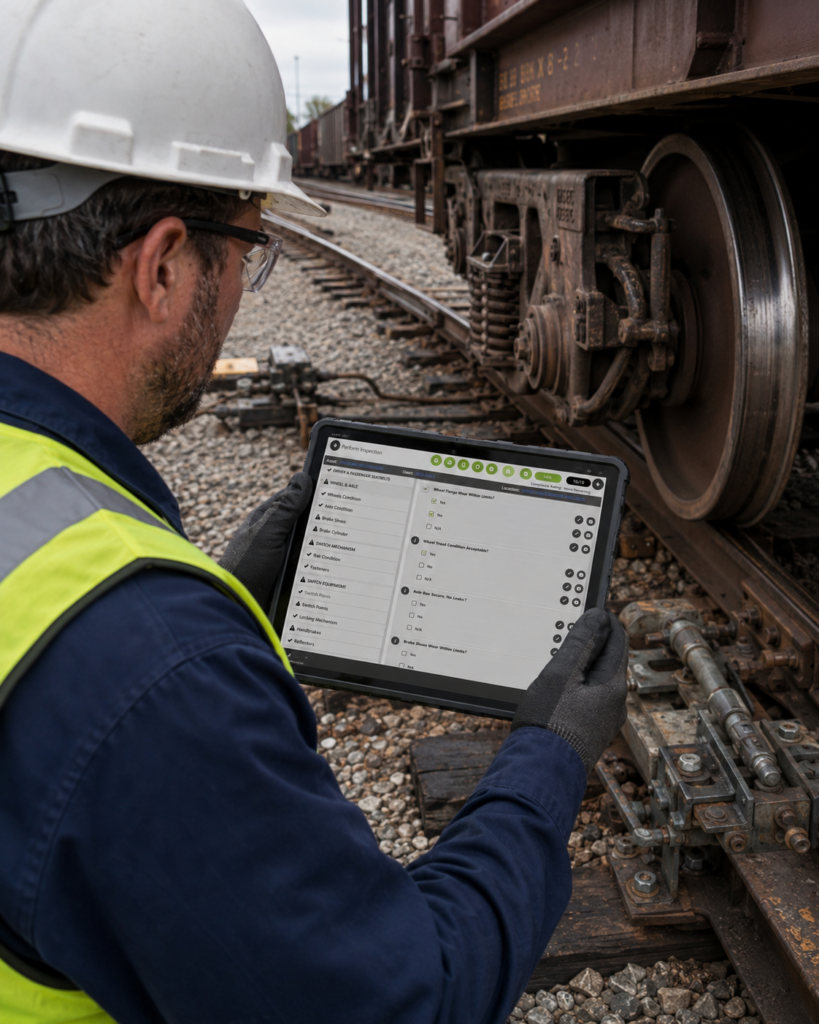
Rail infrastructure spans track, structures, signalling, and rolling stock, each with its own inspection cadence and defect-reporting requirements. Here’s where Field Eagle fits into that work.
Scheduled track walks, ballast and rail wear checks, and structural condition assessments are built into standardized digital forms that every inspector follows consistently, regardless of which section of the network they're covering. Defects are logged with photos, GPS location, and severity ratings directly in the field, not reconstructed from notes after the shift ends.
Signalling equipment checks and component quality inspections run through the same structured workflow, with each finding linked to the specific asset record. A recurring fault on one section of signalling equipment shows up as a pattern across inspection cycles instead of disappearing into disconnected paper logs.
Every completed inspection generates a clean, timestamped record automatically, organized and searchable for Office of Rail and Road audits or internal safety reviews, instead of being pieced together from binders and spreadsheets under time pressure.
Operators managing inspections across multiple routes or sections need the same standard applied consistently everywhere, not a different process depending on which depot or region is running it. Field Eagle standardizes forms and reporting across every section, so network-wide condition and defect data can be compared from one dashboard.
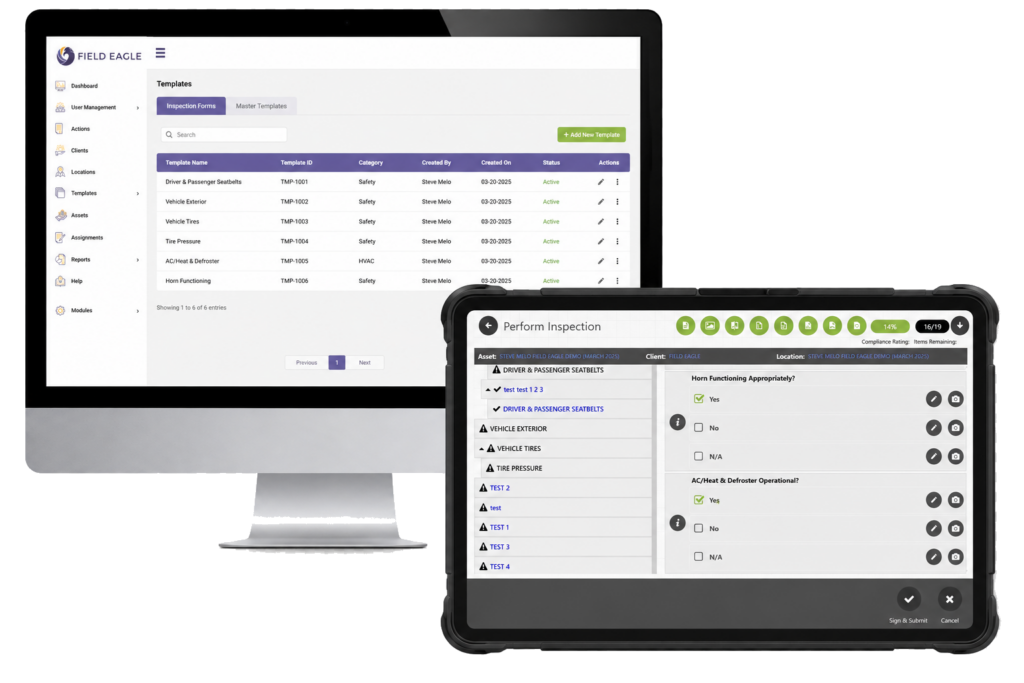
Yes. Field Eagle maintains timestamped, evidence-backed inspection records for track, signalling, and structural condition, organized and retrievable for Office of Rail and Road reviews and internal safety audits.
Yes. Field Eagle standardizes inspection forms and reporting across every route or section an operator manages, so condition and defect data can be compared network-wide from one dashboard instead of reviewed section by section.
Yes. Field Eagle runs fully offline on a tablet, capturing photos, GPS location, and inspection data in remote sections with no connectivity, syncing automatically once the device reconnects.
Yes. Every finding is linked to the specific asset or track section, so a recurring issue shows up as a pattern across inspection cycles rather than as isolated, disconnected reports.
Yes. Field Eagle’s own AI Preventative Maintenance, built in house, compares new inspection results against an asset’s own history and flags gradual deterioration, such as worsening track wear or a signalling component trending toward failure, before it affects service.
Field Eagle’s forms and compliance documentation are configurable to UK rail standards specifically, including ORR and Network Rail requirements, rather than relying on a one-size-fits-all inspection template built for a different regulatory environment.
For rail operators managing inspections across multiple sections, or a single route trying to move off paper-based track walks and defect logs, Field Eagle gives infrastructure and safety teams one system covering the full inspection lifecycle, from the checklist an inspector completes trackside to the compliance record reviewed months later.